

How MGT helped Frederick County turn demographic trends and community voices into a long-term vision for senior centers that support connection, independence, and quality of life.
Frederick County, Maryland, is growing, and over the next decade, some of its most significant growth will be among older adults.
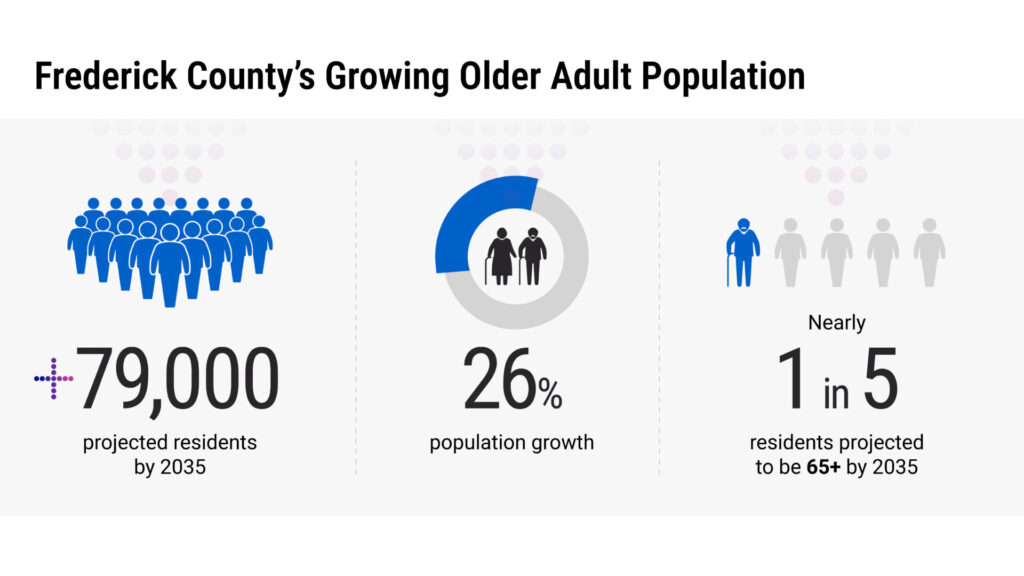
Between 2025 and 2035, the County’s population is projected to grow by approximately 79,000 residents, or 26%. By 2035, adults age 65 and older are expected to represent nearly 20% of the population, while the number of residents age 75 and older is projected to grow even faster.
For the Frederick County Division of Aging and Independence (DAI), those numbers raised an important question: How can the County ensure its senior centers continue to meet the needs of residents today while preparing for the community it will serve tomorrow?
The Need: Preparing a Strong System for a Changing Community
Frederick County already had a strong foundation. The County’s Department of Aging and Independence (DAI) operates five full-service senior centers and a nationally recognized virtual center, providing programs and services that support health, wellness, recreation, lifelong learning, social connection, and independence.
However, many of the County’s physical centers are housed in buildings that were originally designed for other purposes and adapted over time. As a result, some locations face limitations in space, layout, accessibility, and their ability to accommodate future programs and services.
At the same time, population growth is not occurring evenly across Frederick County. Some of the areas experiencing the fastest growth among older adults have more limited access to existing senior center facilities and services.
The County needed a clearer picture of what its senior center network should look like in the years ahead, including where facilities should be located, how large they should be, and how they could better support the ways older adults want to live, connect, and engage with their communities.
That’s when Frederick County brought in MGT to help build that roadmap.
The Approach: Listening First, Then Planning
MGT’s approach focused on understanding both the numbers behind Frederick County’s changing demographics and the experiences of the people who rely on its senior centers. By bringing those perspectives together, MGT helped the County develop recommendations grounded in both data and the realities of the community.
MGT analyzed population and socioeconomic trends, mapped where older adults live today and where future growth is expected, evaluated service and facility gaps, visited senior centers throughout the County, and examined models and practices from comparable communities. These efforts helped create a clearer picture of current conditions and where demand is likely to grow in the years ahead.

But understanding the numbers was only part of the work. MGT and the County also engaged the people who experience the senior center system firsthand through interviews, focus groups, town halls, surveys, and stakeholder conversations with older adults, caregivers, County staff, service providers, community organizations, and the Senior Services Advisory Board.
That combination of research and community input helped MGT connect what the data showed with what residents were actually experiencing. Community feedback reinforced how important senior centers already are to Frederick County, particularly as places that support health, wellness, independence, and social connection. Residents also identified barriers involving transportation, facility capacity, program availability, awareness, and accessibility.
“It was a pleasure to work with MGT because of the team’s ability to pivot when necessary, thoughtful listening and strong facilitation which helped people feel comfortable and draw out honest responses. The report affirms what Division staff already knew and offers a guide as we identify locations for purpose-built facilities. The recommendations also support a long-term vision for helping older adults thrive and will be used during our capital improvement plan presentations, which we are preparing for now.”
- Carolyn True | Division Director, Division of Aging and Independence at Frederick County Tweet
The Solution: A Roadmap for the Next 10 to 15 Years
With a clearer understanding of where Frederick County’s needs were changing, MGT developed a long-term framework that could help the County make more informed decisions about future facilities, services, and investments. The goal: to create a flexible approach that could respond to the distinct needs of communities across the County.
At the center of that framework was a tiered countywide model designed to match facilities and services to population, location, and community needs:
- Regional Senior Centers would serve as larger hubs offering a full range of programs, wellness services, and community partnerships.
- Community Senior Centers would provide flexible, mid-sized facilities in key locations.
- Micro or Rural Senior Centers would preserve convenient local access to core services and opportunities for social connection in lower-density communities.
MGT also identified priority areas for future investment based on population growth, existing service gaps, facility conditions, and community needs. Recommendations included expanding or redeveloping facilities in the Frederick urban core, increasing capacity in eastern and southeastern Frederick County, replacing the existing Brunswick facility, and improving accessibility to services in other parts of the County.
But these recommendations went beyond where future centers should be located. MGT helped Frederick County consider how those spaces could better serve older adults through purpose-built, flexible facilities and stronger connections to healthcare, housing, recreation, libraries, transportation, and other community services.
Together, these recommendations gave the County a framework that could evolve alongside its population rather than simply address today’s facility needs.
From Recommendation to Reality in Brunswick
One of the clearest examples of Frederick County putting this long-term planning into action can be seen in Brunswick, where an existing facility was no longer keeping pace with the needs of the community. At approximately 900 square feet, the Brunswick Senior Center had limited space for programs and activities, making it a clear opportunity to rethink how the County could better serve older adults in the area.
MGT recommended replacing the existing Brunswick facility with a right-sized center designed around local needs and the County’s goal of helping residents remain active and independent as they age. Frederick County has since announced plans for a new Brunswick 50+ Community Center, moving the community closer to a purpose-built facility designed to better serve current and future generations of older adults.
“What stood out to me most was how much Frederick County cares about its community and the people these centers serve. This is really a quality-of-life issue, creating spaces where older adults can stay connected, engaged, and active. It was especially rewarding, and honestly fun, to see the direct impact of our work reflected in the plans for the new Brunswick Senior Center and to be part of something that so clearly supports MGT’s mission of creating positive social impact.”
- Lance Richards | Ed.D. Director, MGT Tweet
Impacting Communities for Good
This work was ultimately about much more than buildings.
Residents consistently emphasized the role senior centers play in creating social connection, supporting wellness, and improving quality of life. These spaces can help create a sense of belonging and reduce isolation while connecting older adults with programs, services, and one another.
With a long-term framework now in place, Frederick County can make future investments with a clearer understanding of emerging needs, what residents value, and how its senior center system can continue evolving alongside the community.
For MGT, that is what impacting communities for good looks like: helping partners turn the needs of their communities into plans that create better places to live, connect, and thrive for generations to come.
Planning for what your community needs next? Connect with MGT to explore how we can help!
